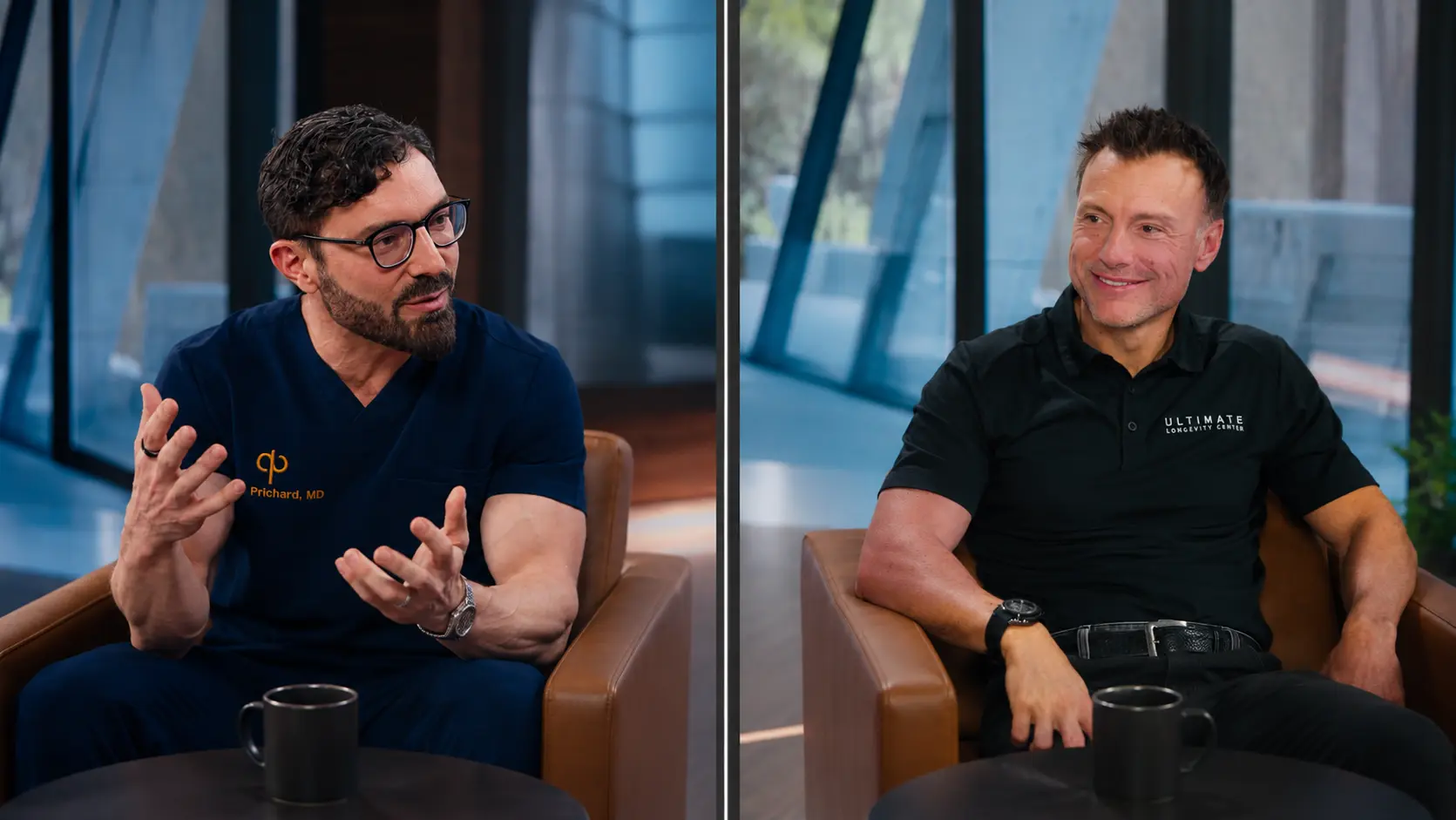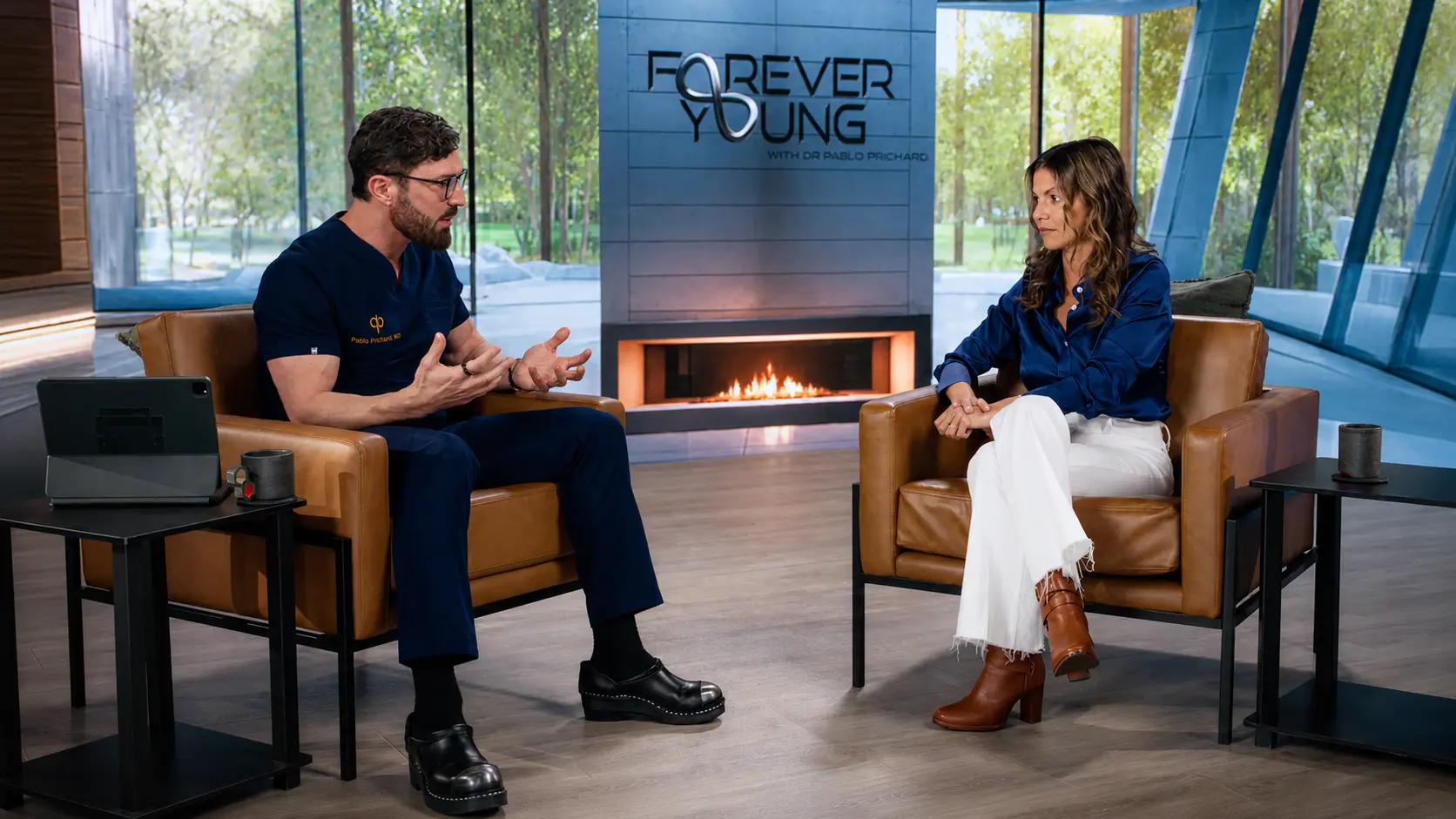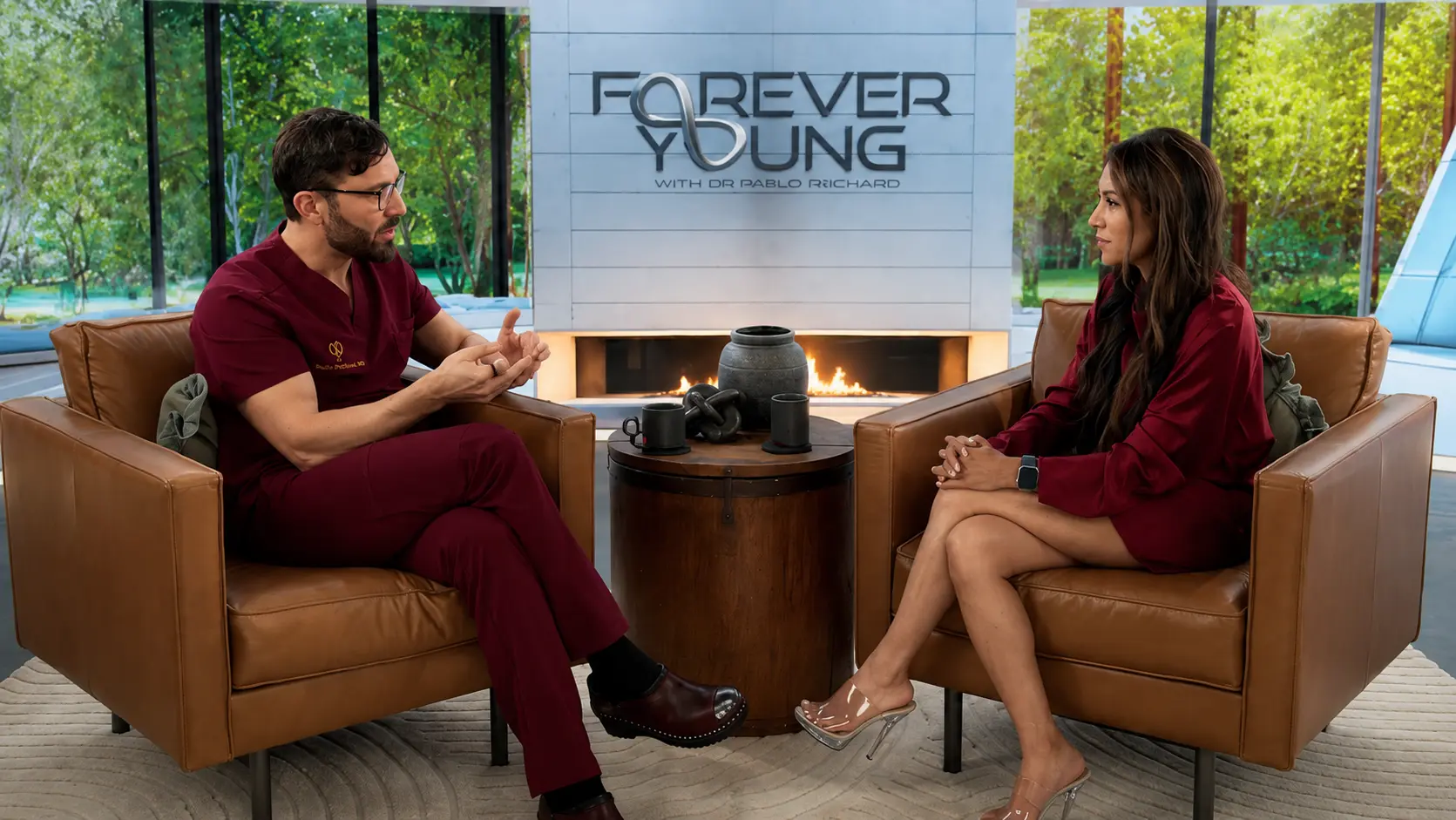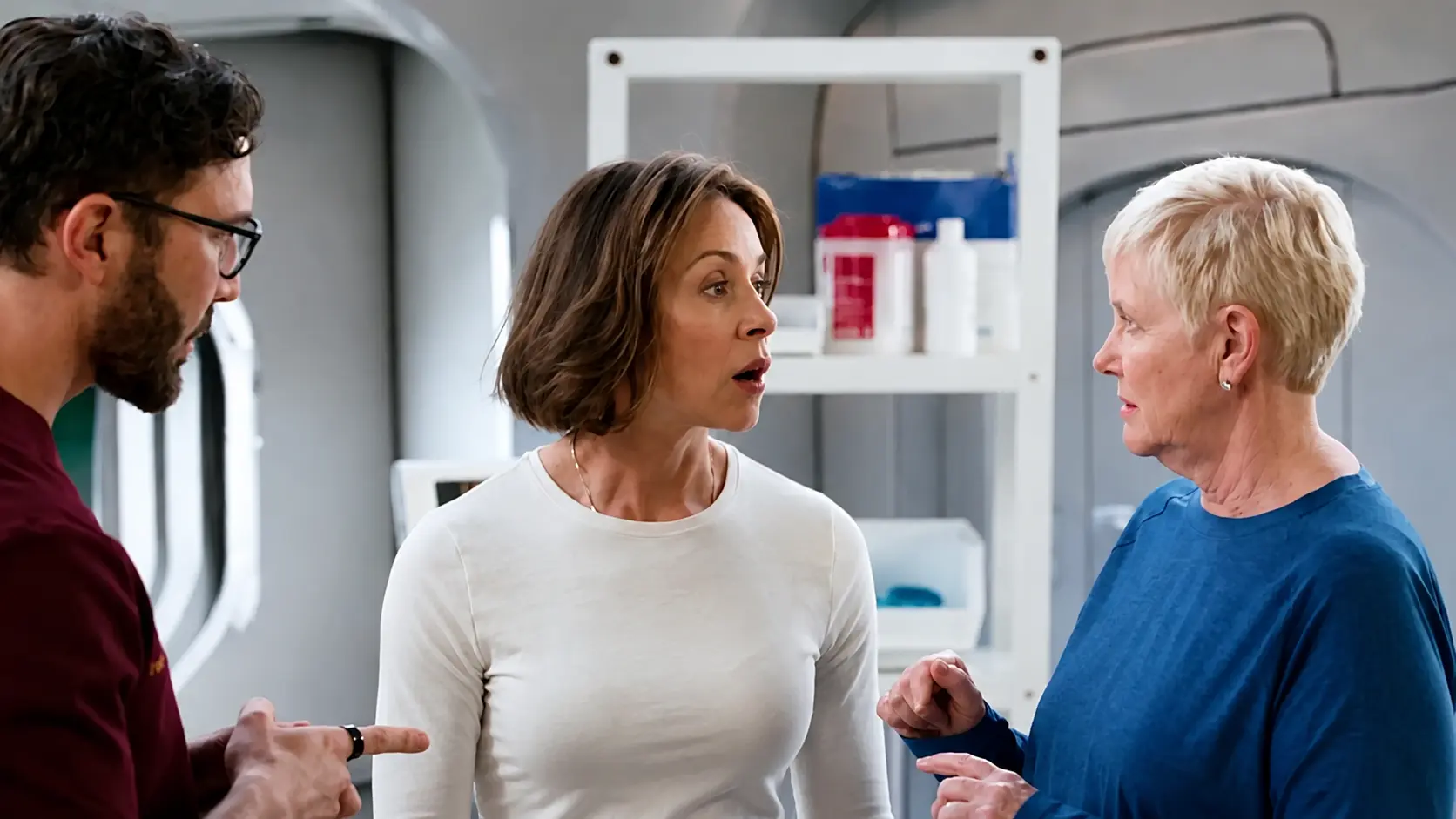
Trey is 21. Driven. Disciplined. Built for motion.
As a college decathlete, he knows something most people figure out too late. You cannot win by being brilliant at one thing. You win by being balanced across all of them.
Dr. Pablo sees something bigger in that logic. He calls it DecathLife.
“The human body isn’t a marathon,” he explains. “It’s a decathlon.”
Ten Events. One Body.
Each event on the track maps to a pillar of how the body ages. Movement. Sleep. Nutrition. Detox. Hormones. The outer shell. Ten systems, each one connected, each one capable of dragging the others when it falls behind.
“The one that’s lacking in decathlon is the one that’s gonna kill your score,” Dr. Pablo tells Trey. “The one that’s lacking in DecathLife is the one that’s gonna kill your cells.”
The framework is simple. What it reveals about Trey is not.
Youth Is an Advantage. It Is Not Immunity.
Trey looks exactly like what he is. A trained, disciplined athlete.
But a few habits open quietly under the surface. A preference for fruit over vegetables. Bedtime around 11 or midnight. And one daily routine he never questioned. One Dr. Pablo uses to make a point about how the most invisible exposures tend to be the most persistent ones.
“Even though you think it’s not really hurting you, it is. It’s just slow and it’s over a long period of time.”
That is the deeper current running through this episode. Aging does not always announce itself. It accumulates.
What the Wheel of Age Reveals
When Trey steps up to the Wheel of Age, he expects a number older than he is. What he gets stops him.
Dr. Pablo explains what the result means. And more importantly, what it does not mean. Because even a good score has an event that needs work. And for Trey, that event becomes the one worth watching.
“No matter how good you are, you can always be doing better.”
What DecathLife Leaves You With
This episode does not ask you to become a decathlete. It asks whether you are training for all ten events.
The body is already running the race. Most people are only paying attention to one or two legs of it. Trey’s story makes visible what that costs. And what becomes possible when someone starts looking at the whole board early enough to matter.
Watch this episode of Forever Young with Dr. Pablo Prichard on NBC.