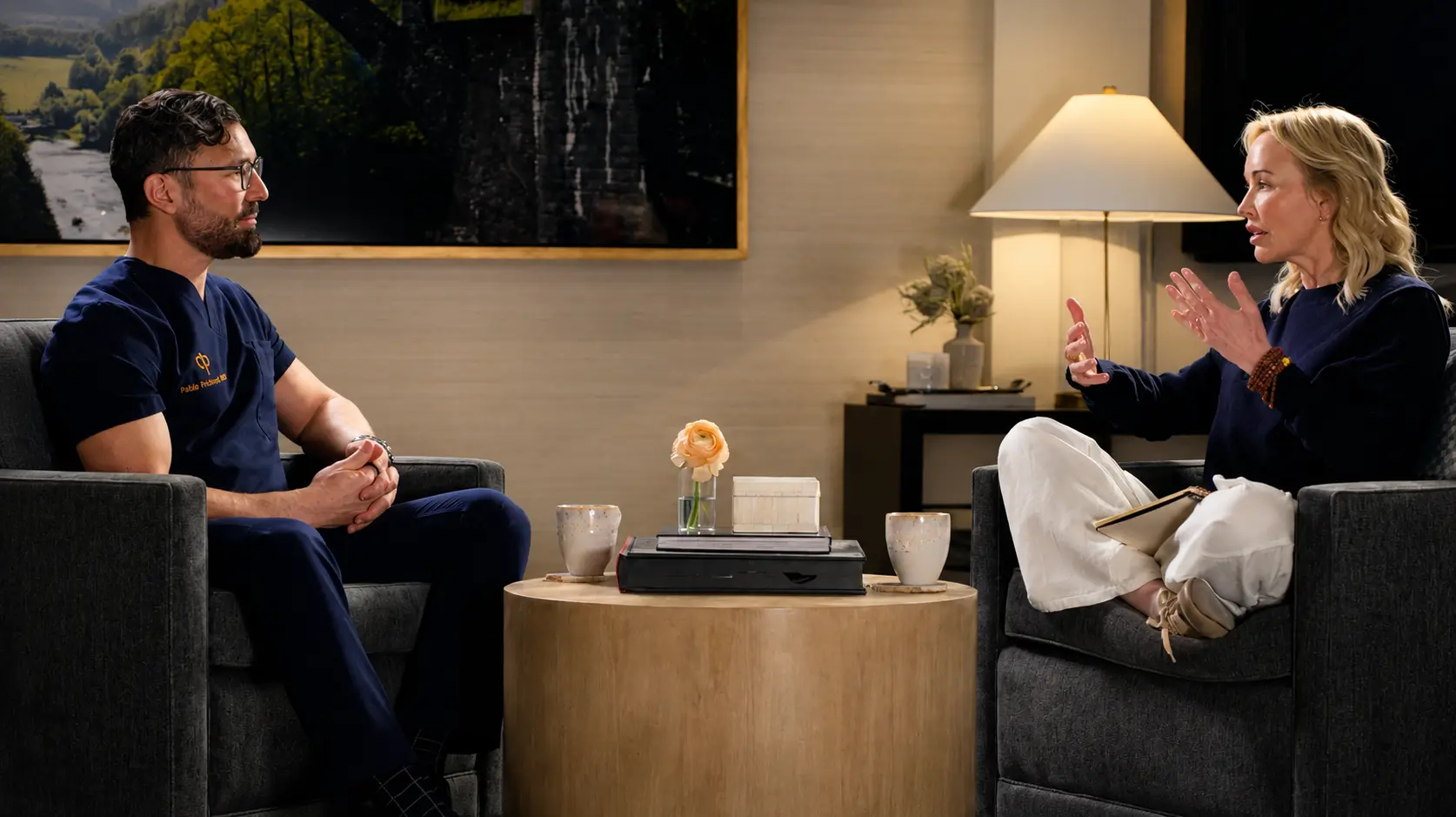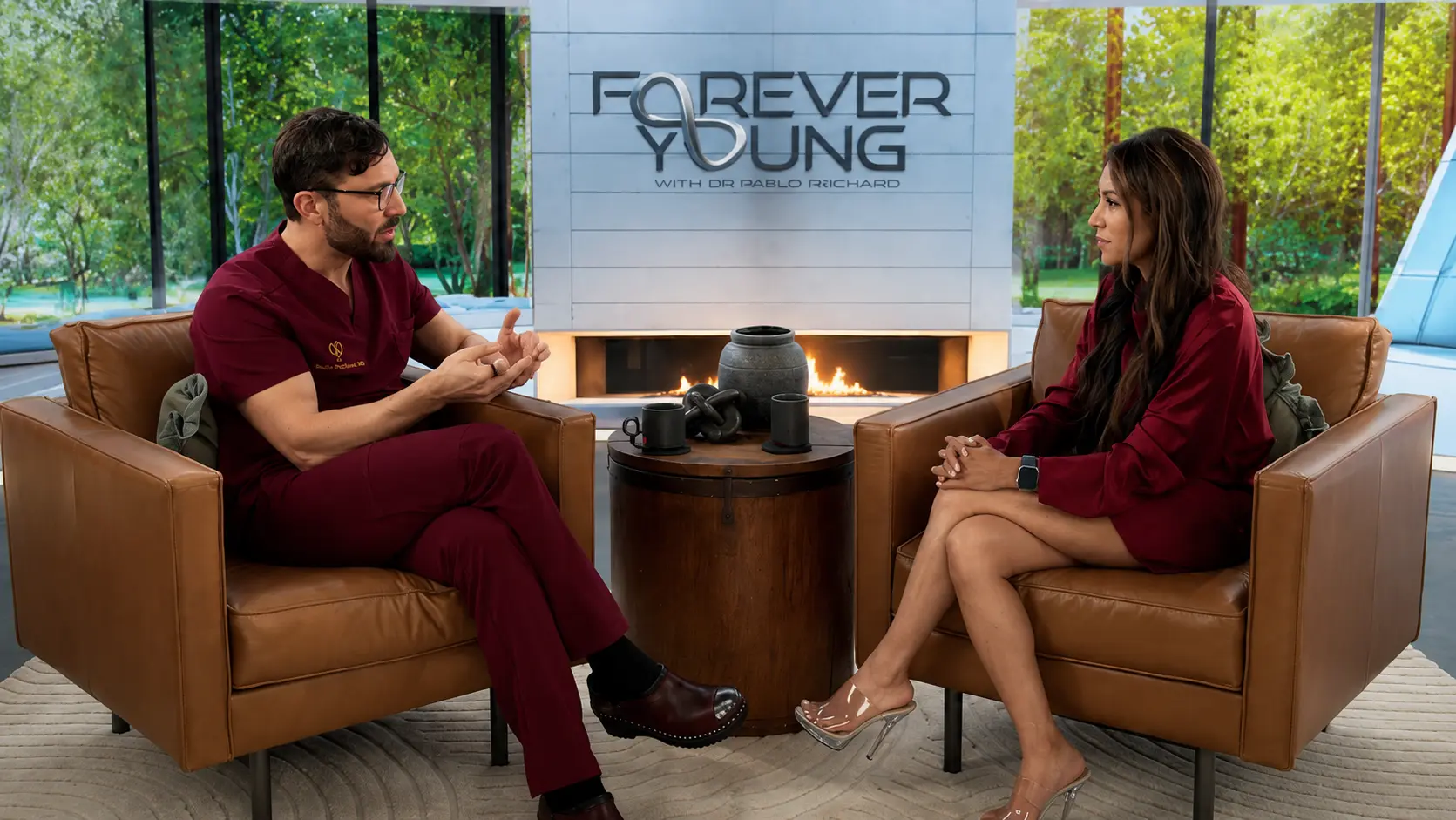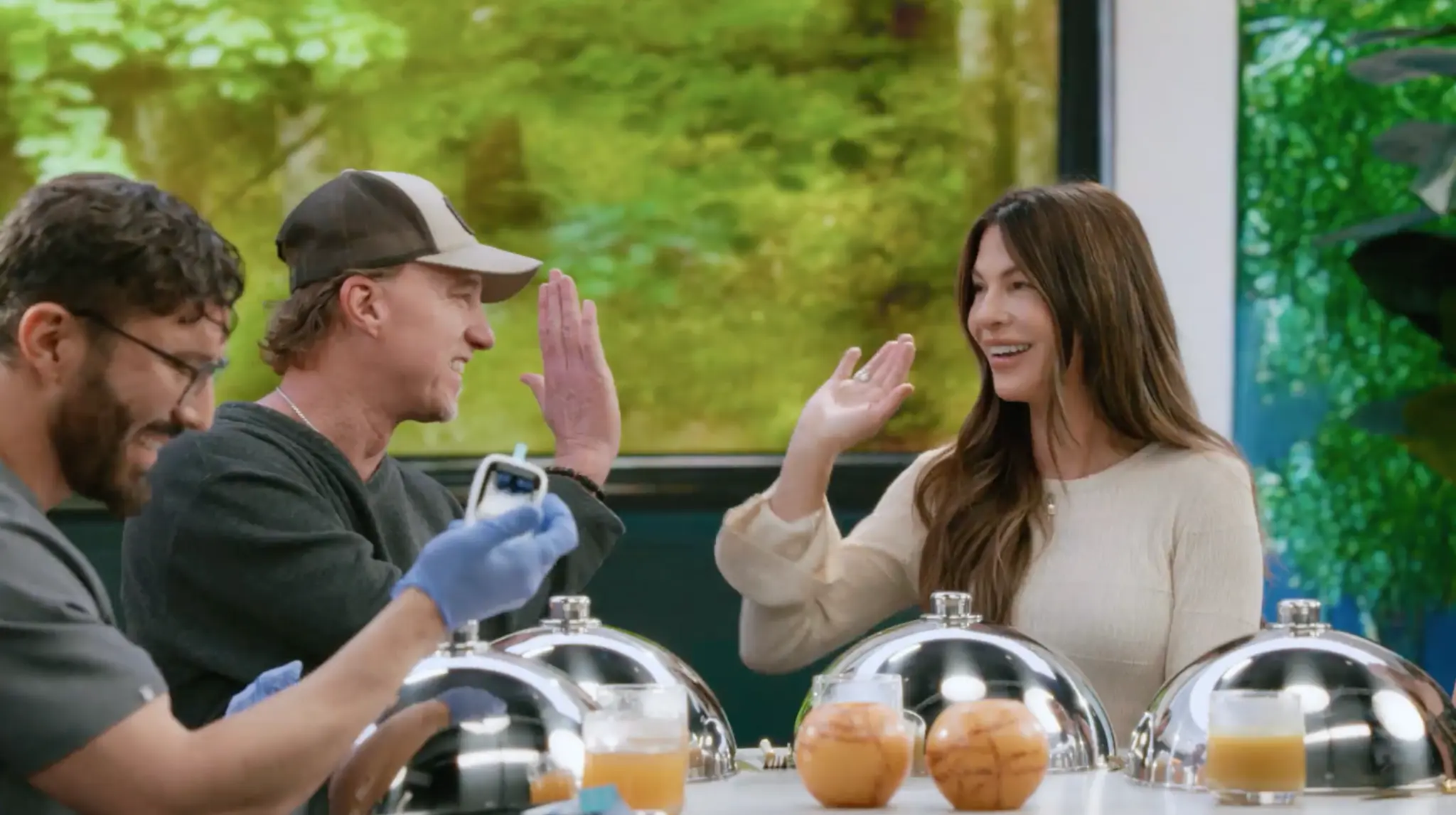
Gina Schock knows rhythm.
As the Hall of Fame drummer for the Go-Go’s, she helped define the sound of a generation. The beat was her language. The stage was her charge. When most people were winding down, Gina was coming alive under lights, adrenaline, noise, travel, and the kind of late-night energy that makes rock and roll feel endless.
But the body keeps its own time.
And eventually, even the strongest drummer has to come down from the encore.
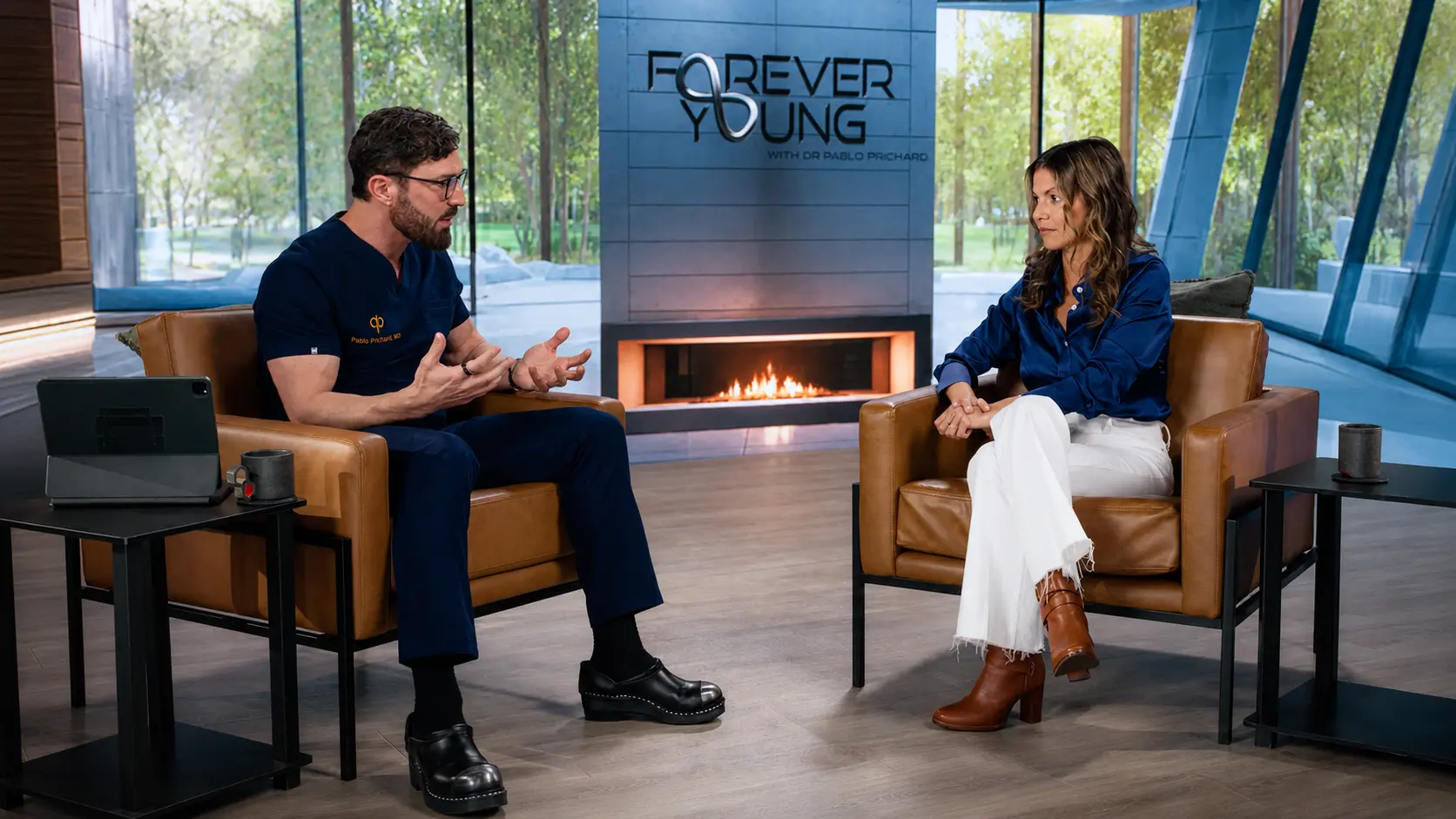
This episode of Forever Young with Dr. Pablo Prichard explores sleep through Gina’s life after dark. Restless hotel nights. A brain that does not always power down. A body trained by decades of performance to stay awake when the world goes quiet.
“I need help sleeping,” Gina says. “Getting to sleep is one thing, staying asleep, quite another story.”
For Dr. Pablo, Gina becomes the perfect case study in what happens when the body’s internal clock falls out of sync with the life it is trying to live.
Sleep Is Rhythm
Sleep can look passive from the outside.
Eyes closed. Lights out. Stillness.
But inside the body, sleep is one of the most active and important processes we have. It is repair. Recovery. Memory. Hormone regulation. Immune function. Cellular renewal. A nightly reset that keeps the rest of the system working.
Dr. Pablo explains sleep through two forces.
The first is the circadian rhythm, the body’s internal clock set by light and darkness. As the sun goes down, it tells the body to slow down and prepare for rest.
The second is adenosine, the body’s internal energy gauge. All day, as we think, move, work, perform, and live, adenosine builds. It creates sleep pressure, the feeling that the battery is finally running low.
When these two forces align, sleep comes naturally.
The clock says night.
The battery says empty.
The body knows what to do.
But Gina’s life has often worked against that alignment. Her circadian rhythm may say it is time to rest, while her performance energy, travel schedule, late-night habits, and mental momentum keep the internal metronome pounding.
When those two forces fall out of time, the music becomes noise.
The Brain Does Not Shut Off
Dr. Pablo begins by looking at Gina’s baseline sleep.
The room is cooled, darkened, and quiet. Gina uses the familiar tools she already relies on: sleep mask, oral appliance, and other supports. The goal is to see what her body does on a normal night and understand the patterns behind her struggle.
Then Dr. Pablo tests the opposite state.
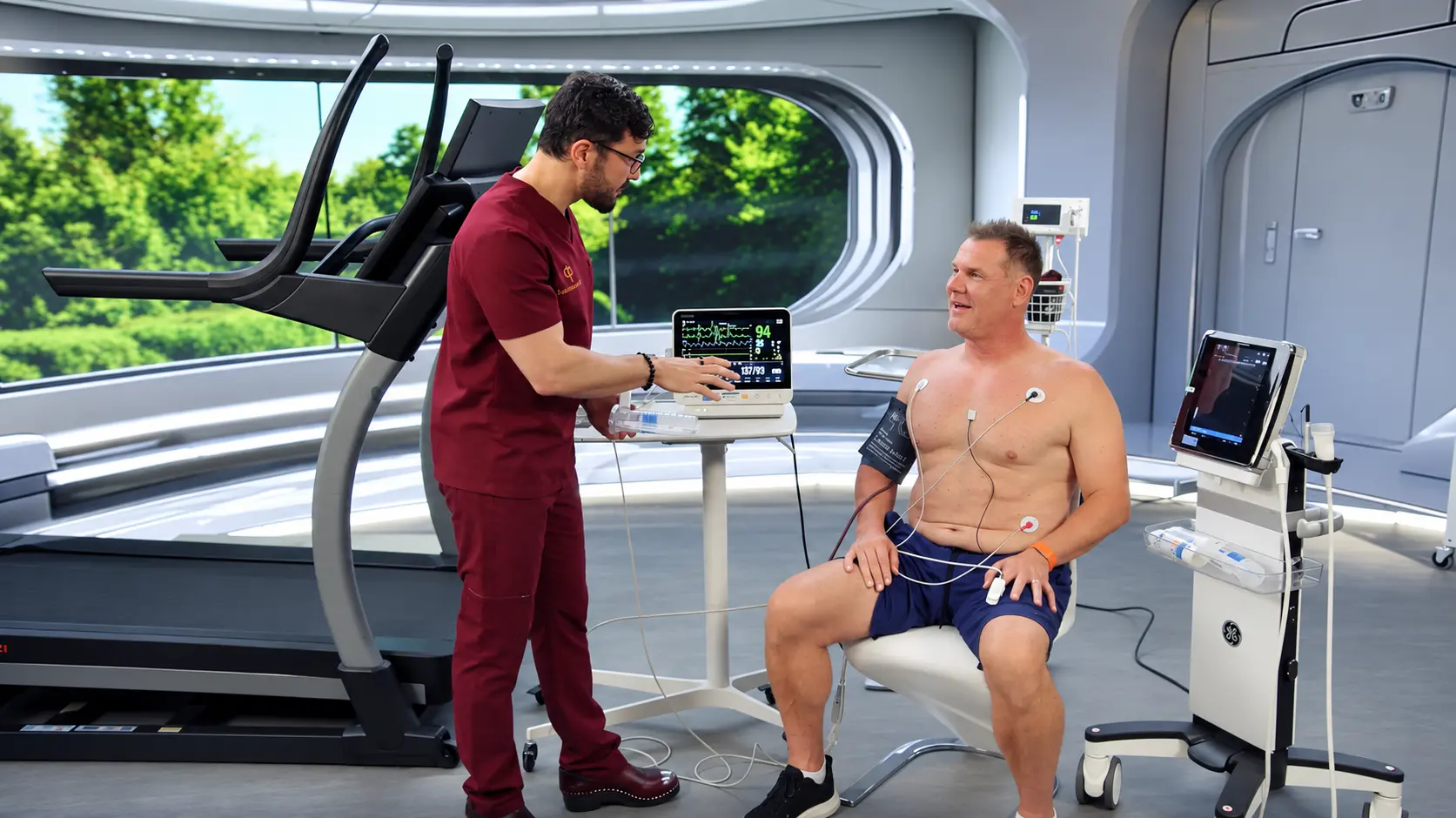
Gina is hooked up to EKG, vitals, and EEG brainwave monitoring while she drums. This is Gina in her element: focused, energized, precise, alive.
That contrast matters.
Sleep is not just about shutting down. It is about the body’s ability to return from activation to rest. Dr. Pablo wants to measure the distance between those two states: the high-intensity performer and the body that needs to power down afterward.
For someone like Gina, the problem is not a lack of energy.
It is timing.
The body has spent a lifetime learning how to turn on. Now it has to relearn how to turn off.
The Nighttime Reset
After the testing, Dr. Pablo takes the intervention into Gina’s real world: a hotel room.
That matters because sleep problems do not happen in a lab. They happen in bedrooms, hotel rooms, tour schedules, late-night routines, and the quiet hours when the brain decides it still wants one more thing.
The first target is late-night snacking.
If food comes too close to bedtime, the body has to digest when it should be recovering. Dr. Pablo explains that eating should happen at least two to three hours before bed, so the system can shift away from processing and toward repair.
Then come screens.
Without the TV, Gina reaches for the phone. Doom scrolling. Dopamine hits. A brain being stimulated when it needs a softer rhythm. Dr. Pablo swaps the screen for a book, giving her mind something calmer and steadier.
He also introduces sleep technology: a headband designed to track alpha waves and use timed sound through bone conduction to help guide the brain toward sleep. Then he adds the basics that matter just as much: blackout eyewear, her sleep apnea device, a neck pillow, a dark room, and a cool temperature around 68 degrees.
No single trick fixes a lifetime of late nights.
But the signal is clear.
The room tells the body it is safe to stop.
Morning Starts the Night Before
The next morning, Dr. Pablo takes Gina outside.
Sunlight becomes the second half of the sleep intervention.
Morning light helps reset the circadian rhythm. Within about 30 minutes of waking, natural light hits the eyes and tells the body, this is morning. That signal helps anchor the day, and 12 to 14 hours later, it helps guide the body back toward sleep.
Sleep does not only begin at night.
It begins when the body learns when the day has started.
For Gina, who enjoys getting up early, the morning reset feels natural. A walk, a little sun, a quiet moment outside. These are not complicated tools. But they teach the body timing, and timing is the heart of sleep.
You do not fix sleep in one night.
You begin fixing it the moment you step into the light.
What the Wheel of Age Reveals
When Gina steps up to the Wheel of Age, the result gives the episode its bigger stakes.
Her biological age reads 70.
Gina is surprised. She works out three days a week with a trainer. She is active, vibrant, and still full of energy. But Dr. Pablo points to the missing piece: fragmented sleep.
Exercise matters. Nutrition matters. Energy matters. But without proper sleep, the body does not recover the way it should. The work does not land as well. Repair slows. The mind can be affected. The whole system loses rhythm.
Dr. Pablo’s message to Gina is direct but hopeful.
She is not doing badly. She looks fantastic. Her labs do not show anything major. But her sleep needs attention before it begins affecting more of her health.
Gina understands the assignment.
She promises to work on the sleep habits consistently.
With good sleep, Dr. Pablo explains, many of the factors pushing the body to age faster can be improved.
Rock and roll still has a place.
But recovery has to get its verse too.
Three Non-Negotiables for Better Sleep
Dr. Pablo closes with three simple sleep principles.
Pick a bedtime and protect it.
The body runs on rhythm. Going to bed and waking up at consistent times trains the circadian clock to work with you instead of against you.
No screens or food one hour before bed.
Blue light tells the brain it is still daytime, delaying melatonin. Late food keeps the body in digestion mode when it should be entering recovery.
Keep the room cool and dark.
The body needs a signal that it is safe to shut down. Lower the temperature. Black out the space. Let the system fully power down.
These are not glamorous fixes.
They are foundational.
Sleep is not downtime. It is the body’s nightly rebuild.
What This Episode Leaves You With
Sleep is the rhythm underneath every other rhythm.
It shapes energy, focus, memory, hormones, recovery, inflammation, and the speed at which the body ages. When sleep falls out of time, everything else has to work harder to stay in tune.
Gina’s story makes that visible because her life has been built on rhythm. She knows what it means to lock into a beat. But her sleep shows what happens when the body’s deeper rhythm gets thrown off by late nights, travel, screens, adrenaline, and years of powering through.
This episode does not treat sleep as a luxury or a soft wellness habit.
It treats sleep as repair.
The takeaway is not that everyone needs a perfect night immediately. It is that the body can relearn timing. A protected bedtime. Less screen stimulation. Earlier food. A cooler, darker room. Morning sunlight. Repeated signals that tell the system when to start and when to stop.
When sleep returns to rhythm, the whole body has a better chance to follow.
Watch this episode of Forever Young with Dr. Pablo Prichard on NBC to see how Gina Schock’s rock-and-roll lifestyle reveals the science of circadian rhythm, sleep pressure, recovery, and aging, and why protecting sleep may be one of the most powerful ways to stay forever young.