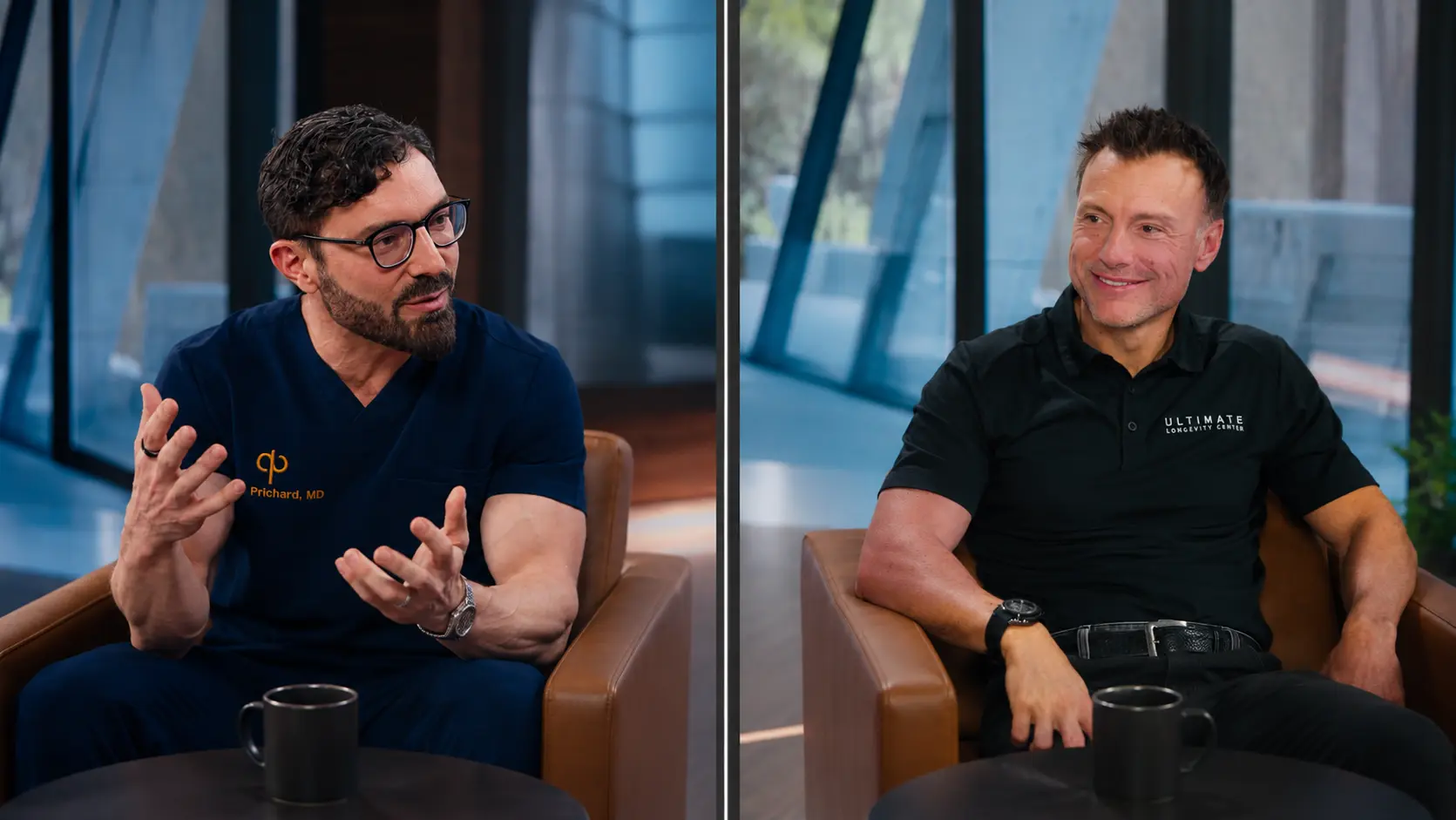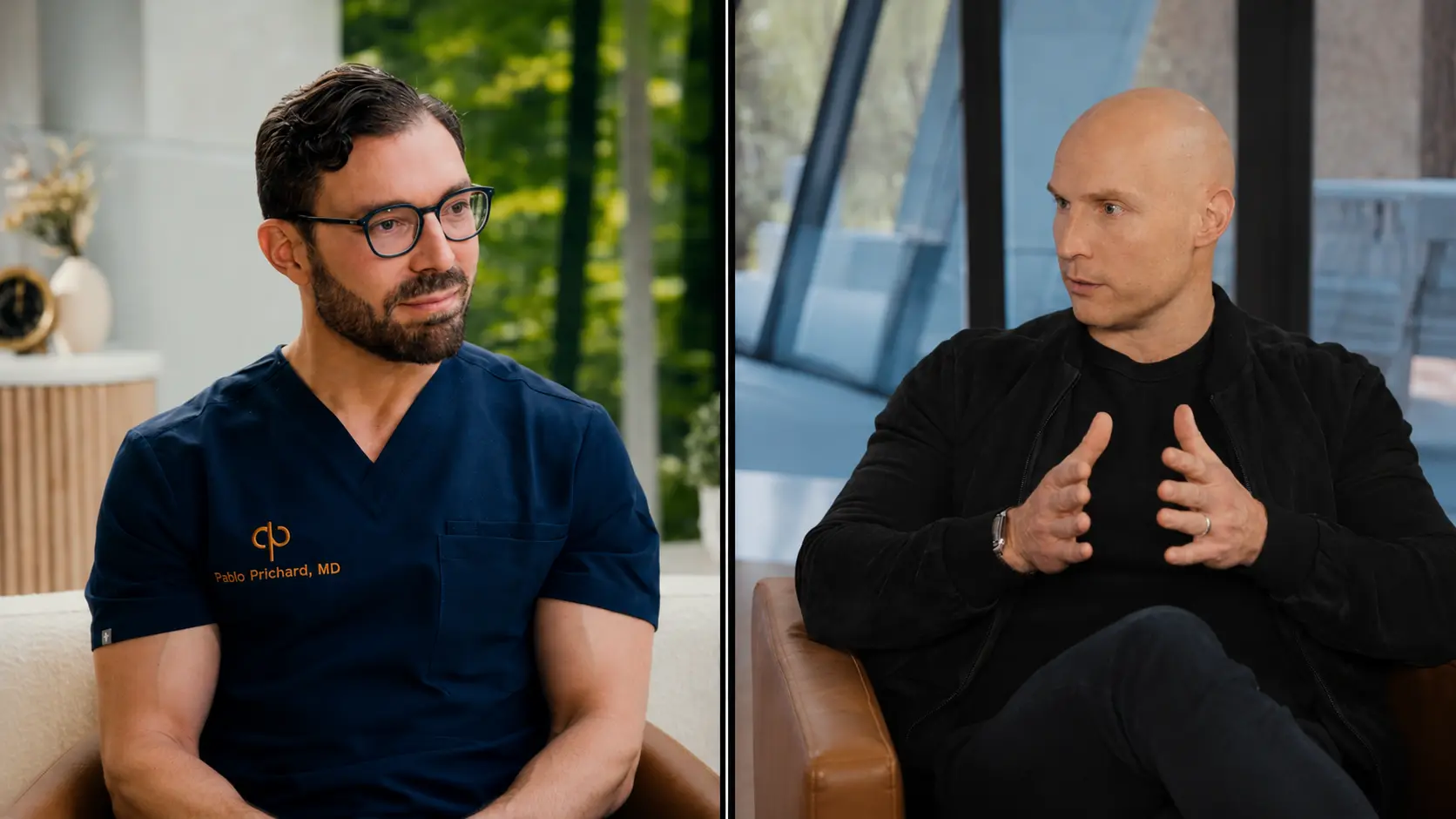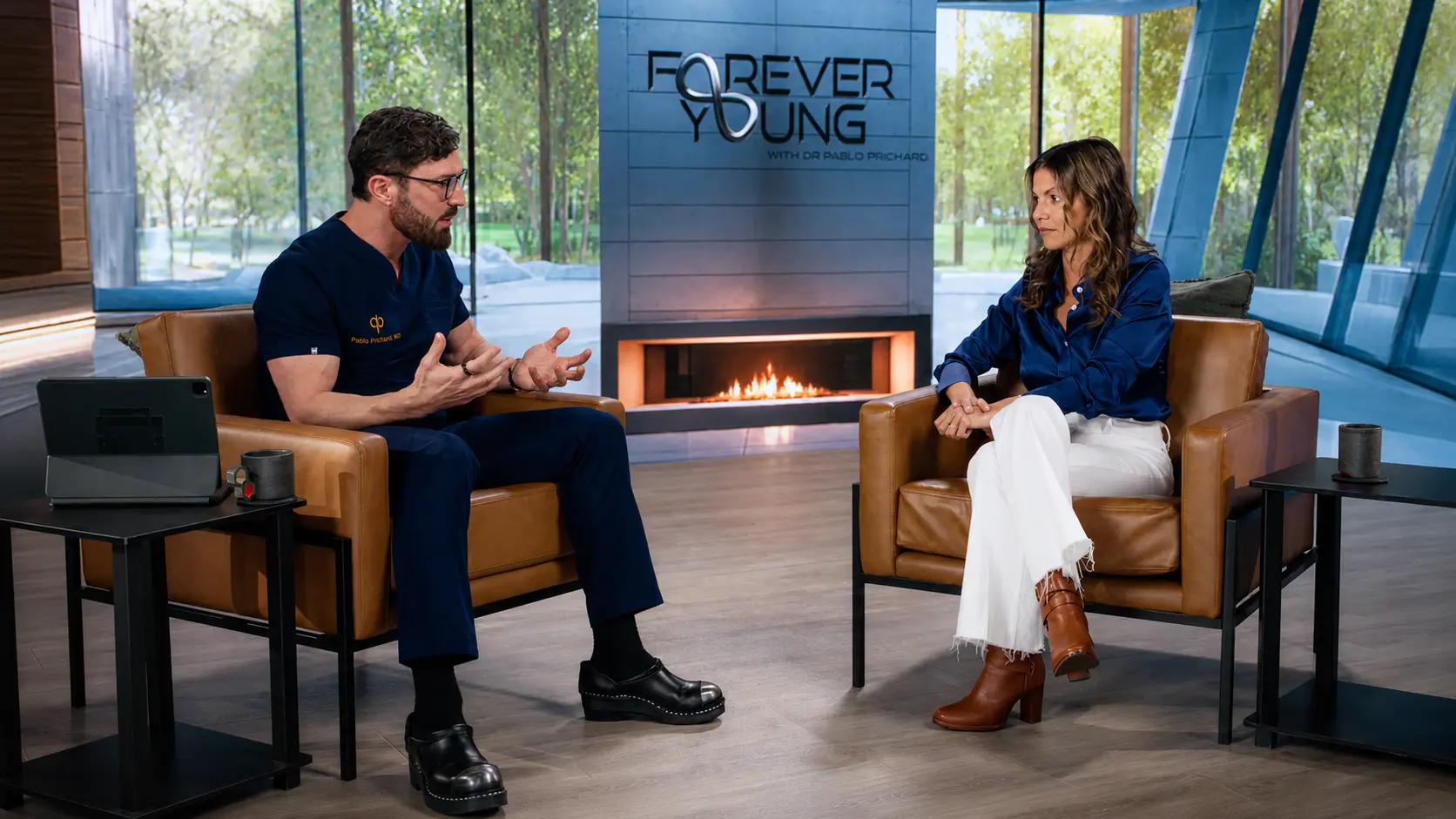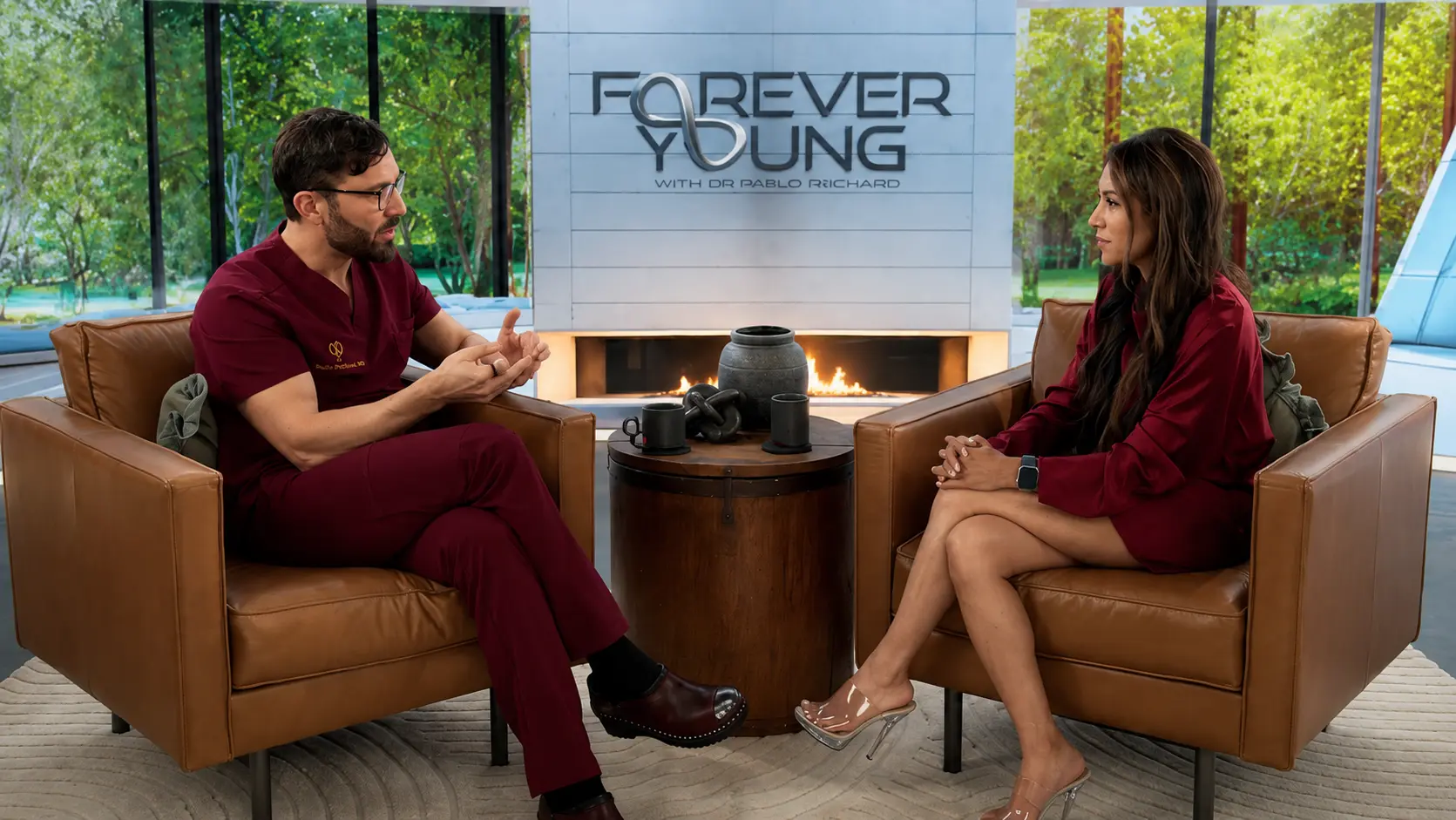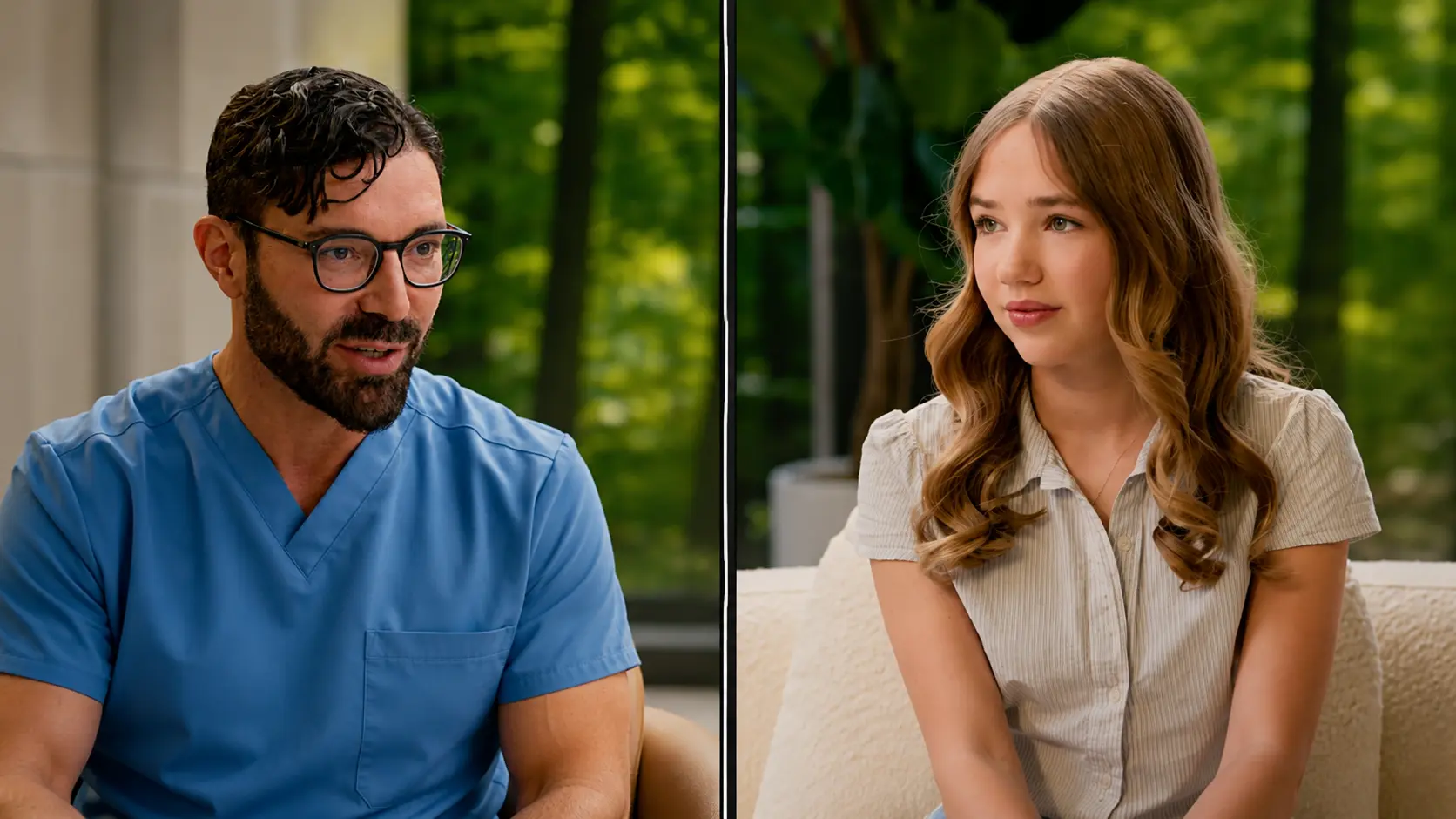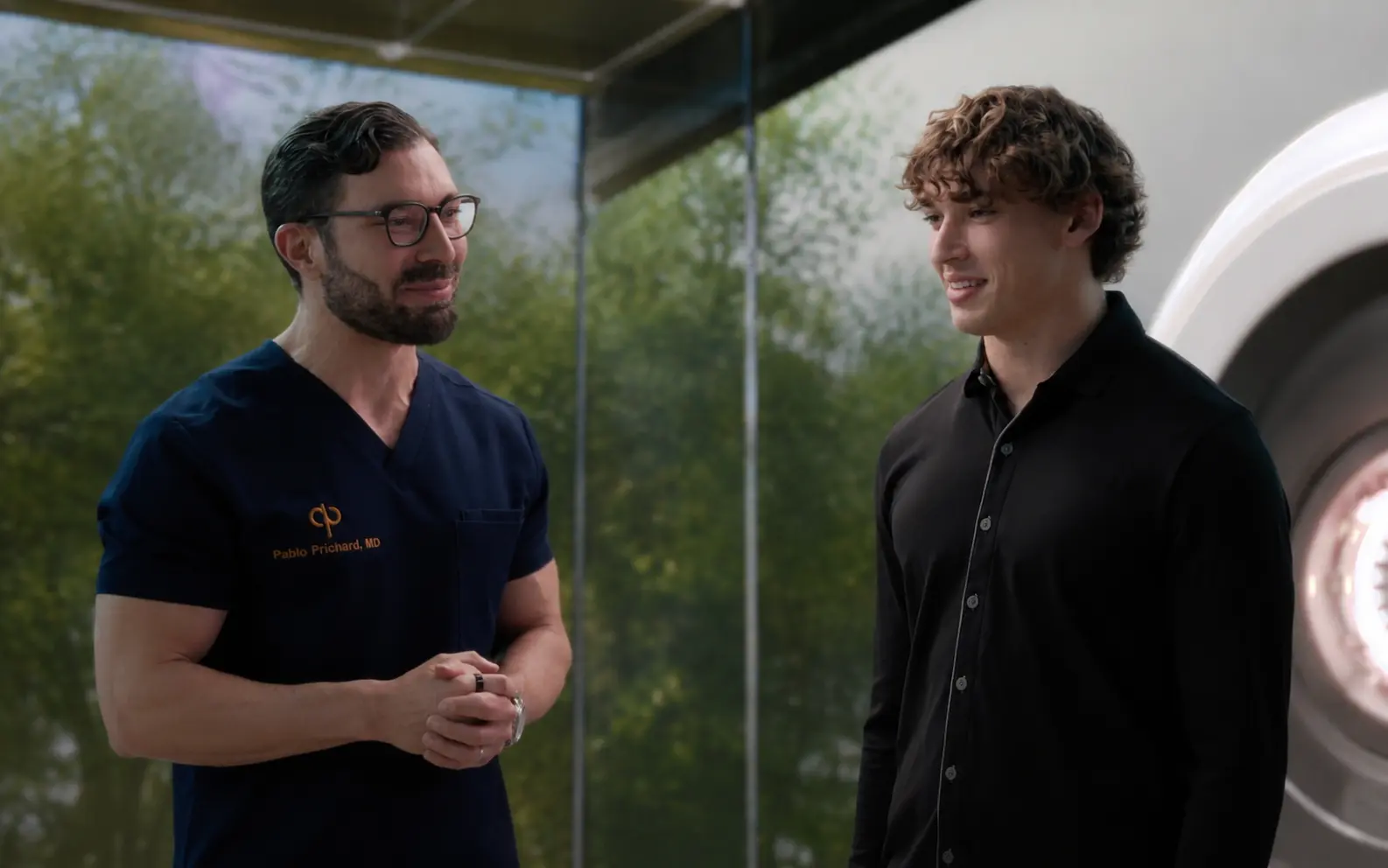
Jane and Shari know timing. As performers, writers, and stars of Thee Third Act, they live in it. The setup. The pause. The word that lands exactly when it should.
Brain fog has different timing entirely. It arrives mid-sentence. It takes the simple word. It turns a familiar thought into a question mark.
“When I started losing words,” Jane says, “really simple words like ‘light’ or ‘refrigerator,’ I really thought I was going through dementia.”
That moment is funny because it is real. And real enough to be unsettling.
The Room Is Still There. It Just Got Loud.
Dr. Pablo does not meet that fear with reassurance. He meets it with a framework.
Brain fog is not memory loss. It is what happens when the brain is asked to manage too many competing signals at once. And something in the system stops running the meeting.
The brain is a writers’ room. For years, the room runs well. Then something shifts. The lights dim. Everyone starts talking at once.
“The writers are still talented,” Dr. Pablo explains. “They just lost the showrunner.”
What that showrunner is, and what takes it offline, is where the episode gets specific.
More Than One Cause
Dr. Pablo walks through what the labs show and what they point toward. Hormones play a role. So does sleep, blood sugar, inflammation, stress, and what the body is quietly absorbing every day. Brain fog is not one thing going wrong. It is several things going wrong at the same time.
Then the Chaos Gets Recreated
To show what brain fog actually feels like, Dr. Pablo does not describe it. He builds it. Jane and Shari start with a simple task. Then the pressure stacks. Heat is added. The brain is asked to switch, hold, respond, and keep moving. All at once.
“The burn, the heat, the exhaustion,” Dr. Pablo says. “This is what we’re simulating here, brain fog in the midst of menopause.”
What happens next is worth watching in real time.
What the Wheel of Age Reveals
Both results land differently. One is encouraging. The other shows more work ahead. But not what either of them expected walking in.
“It wasn’t as high as I thought it was gonna be,” Shari says. “It’s given me things that I know that I can work towards.”
What This Episode Leaves You With
Brain fog can feel embarrassing. Frightening. Like something slipping that cannot be recovered. This episode reframes it as information.
The fog can lift. The room can settle. The writers can get back to work.
Your brain is still writing the next act.
Watch this episode of Forever Young with Dr. Pablo Prichard on NBC to see how brain fog happens in real time, and what it takes to clear the room.