Life for Sabrina Soto has always moved fast. As a designer, TV host, author, and mom, her days are a constant balancing act between creative projects, parenting, and finding a moment to breathe.
But when a close friend’s illness forced her to confront the question of how healthy she really was, Sabrina decided it was time for a change. She wanted to look beyond the mirror and see what was happening inside.
“I want to be the best version of myself for my daughter,” Sabrina shares. “I’ve spent so many years focusing on everything and everyone else. Now it’s time to focus on my own health.”
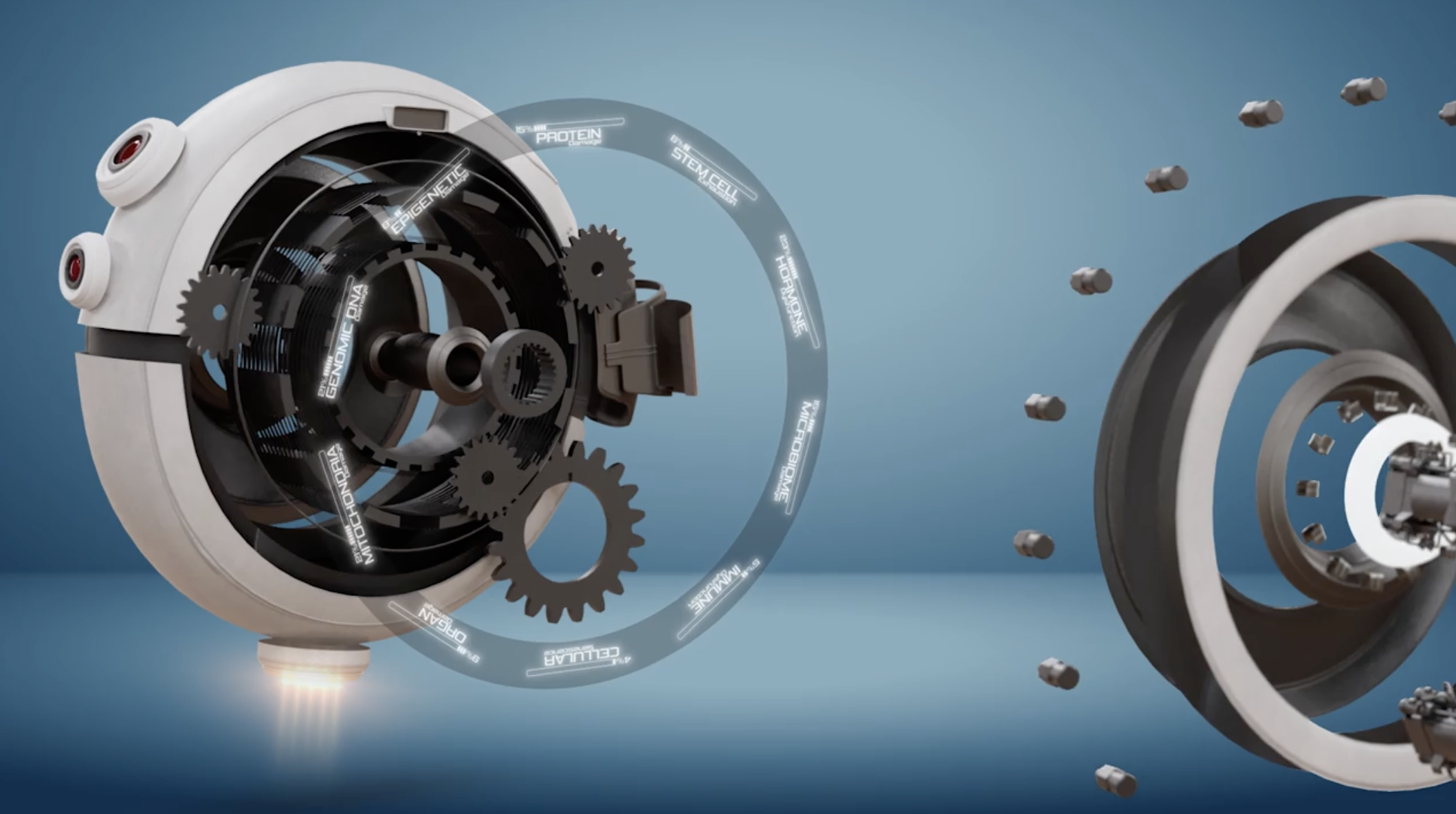
That decision led her to Forever Young and to Dr. Pablo Prichard, whose pioneering concept, The Wheel of Age, measures the body’s actual biological aging rate.
From Design to Data: A Different Kind of Makeover
Known for transforming homes and spaces, Sabrina was about to redesign something far more personal—her own biology. Dr. Pablo’s tests would reveal her true biological age, looking beyond birthdays to measure how her organs, cells, and systems were performing.
“Aging isn’t time passing,” Dr. Pablo explains. “It’s damage accumulating. Time is the canvas—damage is the brush.”
Over the course of the episode, Sabrina undergoes a series of cutting-edge assessments designed to reveal what years of stress, sleepless nights, and daily multitasking can do beneath the surface.
The MRI: Facing the Unknown
The first test was a full-body MRI, an imaging scan that reveals what’s happening inside every major organ. Sabrina admitted she was nervous—what if the results showed damage she couldn’t see or feel?
When the results came back clear, her relief was palpable. “I didn’t know what I was going to walk into that day,” she said. “To hear there was no permanent organ damage—it was such a weight off my shoulders.”
Dr. Pablo explained that this kind of scan isn’t about fear—it’s about awareness. The MRI represents the macro view of the Wheel of Age, showing the physical side of the story before zooming in to the microscopic level.
The Stress Test: Heart in Motion
Next came the cardio stress test—a treadmill-based workout that pushes the heart, lungs, and muscles to their limits. For someone used to studio lights more than running shoes, it was a challenge.
“One minute I was walking, and the next, I was fighting for my life going uphill,” Sabrina laughs. “I thought he was going to have me sit and talk about my feelings—not sprint uphill with wires attached!”
But the results surprised everyone. Her heart and lungs were strong, responding efficiently under pressure. For Dr. Pablo, this confirmed that even a busy lifestyle can hide resilience—and that it’s never too late to strengthen it further.
The Metabolic Test: The Inner Engine
After all that exertion, Sabrina’s next test took a calmer turn. The resting metabolic rate analysis measured how efficiently her body burns energy and repairs itself at rest.
“People think metabolism is about weight or vanity,” Dr. Pablo explains, “but really, it’s a window into how your cells manage energy—how they age.”
This test represents the micro level of the Wheel of Age: the cellular dance of mitochondria, DNA, and hormones working together—or, in some cases, wearing out.
“I kept thinking about my daughter,” Sabrina recalls. “Every time a test felt scary or uncomfortable, I reminded myself that I’m doing this for her—and for my future.”
The Microdamage Caught on Laboratory Data
This was not the whole picture, however, as while there was no significant Macro or Heart, Lung or Cancer damage caught on MRI or Stress Test, her Laboratory data showed a different picture. There was ongoing metabolic damage, hormone damage, micronutrient damage, as well as a genetic anomaly that, if left untreated, would have led to further brain and vascular damage.
This is why simply feeling healthy while ignoring ‘Micro’ or cellular damage that may be occurring, can eventually show up as ‘Macro’ or visible damage.
The Results: Turning Awareness into Action
When all the data came together, Dr. Pablo revealed the results of Sabrina’s Wheel of Age assessment. While her organs and cardiovascular system were in great shape, subtle cellular changes showed that her wheel was starting to spin faster—a signal that now was the perfect time to intervene.
“While Sabrina looks healthy on the outside, some of the microscopic wear we found could eventually accelerate her aging,” Dr. Pablo explains. “The good news is, she can reverse much of that by focusing on recovery, stress, and sleep.”
For Sabrina, the revelation wasn’t about fear—it was motivation. “I realized how much my choices matter,” she says. “This wasn’t about numbers or data. It was about knowing I have control over how I age.”
Aging Isn’t Fate—It’s Feedback
What makes The Wheel of Age so powerful is how it reframes aging from something inevitable into something interactive.
“Your body doesn’t age on one timetable,” says Dr. Pablo. “Every system—your heart, brain, immune function, even your DNA—ages at its own pace. The goal is to bring them back into balance.”
That message resonates through Sabrina’s journey. For her, the tests weren’t about finding flaws—they were about finding focus.
The episode ends with a simple truth that echoes long after the credits: aging isn’t a countdown. It’s a composition—a living piece of music that can fall out of tune but also be brought back into harmony.
What Sabrina Learned and Why It Matters
Sabrina’s experience mirrors the story of so many people juggling careers, family, and the demands of modern life. Her courage to ask “How old am I, really?” sparks a conversation that every viewer can relate to.
Her journey reminds us that it’s not too late to take control of our health. The power to slow the wheel—and maybe even turn it back—starts with awareness.See what Sabrina learned about her body’s true age—stream The Wheel of Age now.