Most of us measure age by birthdays. We celebrate the years that pass, count the candles, and accept the fine lines that come with them. But what if the calendar isn’t the real measure of aging? What if two people born in the same year could be decades apart biologically?
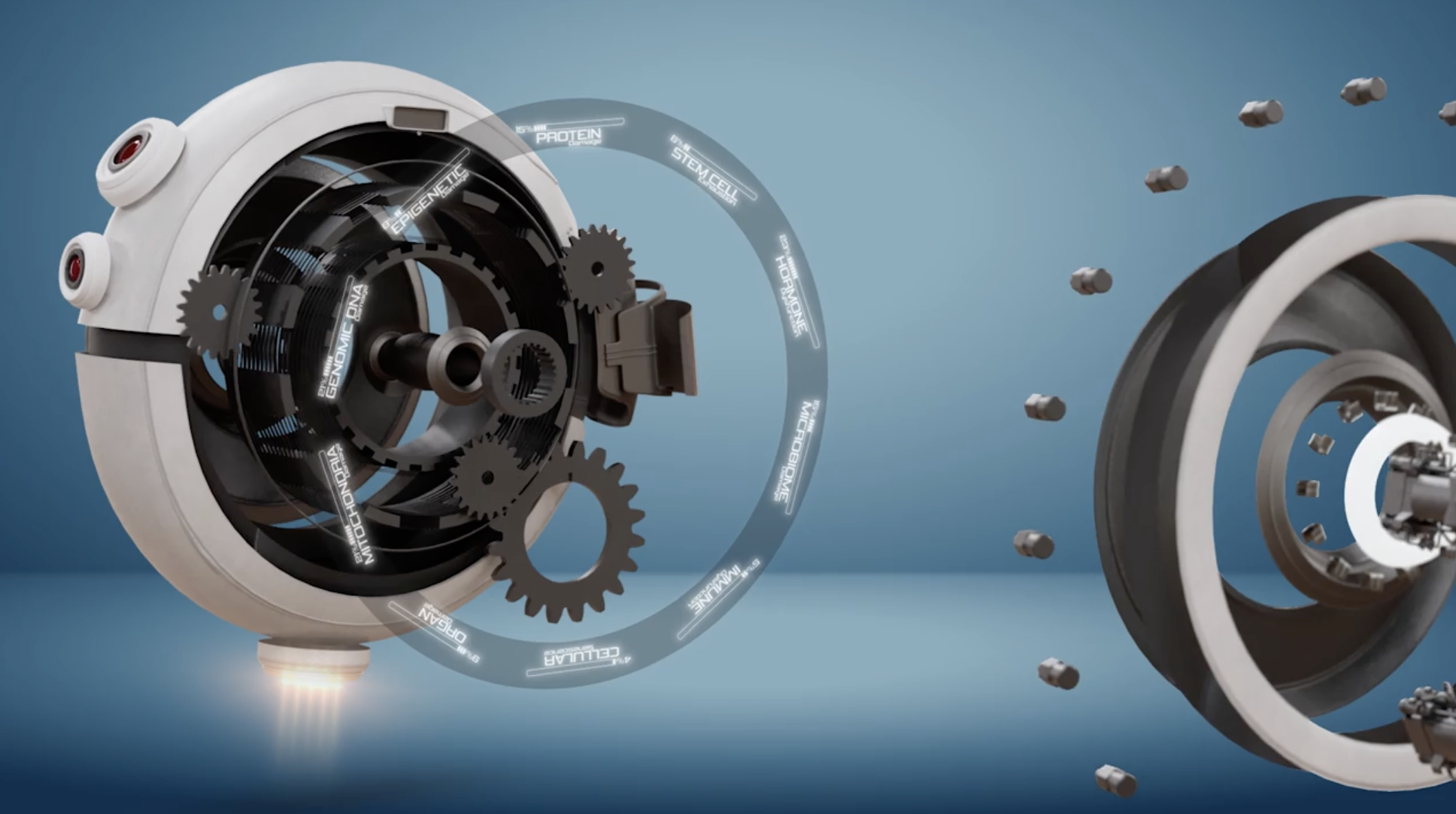
That’s the idea at the heart of biological age, and it’s changing how science, medicine, and even everyday wellness view the passage of time. In the premiere episode of Forever Young, Dr. Pablo Prichard introduces a new way to understand aging through a groundbreaking framework called The Wheel of Age.
“Aging isn’t time passing,” says Dr. Pablo. “It’s damage accumulating. Time is the canvas, damage is the brush.”
Chronological Age vs. Biological Age
Chronological age is simple: the number of years you’ve been alive. But biological age tells a deeper story. It measures how your cells, tissues, and organs are actually functioning, as well as the amount of “wear and tear” your body has accumulated over time.
Two people might both be 45 years old chronologically, yet one may have the cellular health of someone 35, while the other’s body could be functioning more like a 55-year-old. The difference lies in how their bodies respond to damage and repair.
From our late 20s onward, tiny molecular changes begin to appear in our cells: DNA breaks, mitochondrial slowdown, protein damage, and inflammation. Some of this damage is natural, but much of it is influenced by the lives we lead: what we eat, how we sleep, how we handle stress, and the environments we live in.
Dr. Pablo describes this interplay as a dance between biology and choice. The clock may keep turning, but how quickly the wheel spins is up to us.
The Science of The Wheel of Age
In The Wheel of Age, Dr. Pablo breaks aging down into ten core systems that define how “young” or “old” our bodies truly are:
- Mitochondria – The tiny power plants of your cells, responsible for generating energy.
- DNA – The blueprint of life; when it’s damaged, repair systems have to work overtime.
- Epigenome – The layer of chemical tags that tell your genes when to switch on or off.
- Proteins – The workers of the body that can misfold or clump as we age.
- Stem Cells – The repair crew that rebuilds tissue, but can tire over time.
- Hormones – Messengers that regulate energy, mood, and metabolism.
- Microbiome – The gut ecosystem influencing immunity and inflammation.
- Immune System – The defender that can weaken or become overactive with age.
- Senescent Cells – “Zombie” cells that no longer function but refuse to die.
- Organs – The visible outcome of all these systems working or failing together.
When one system weakens, it doesn’t fail alone. Like a domino effect, cellular damage ripples across the wheel, speeding up the aging process. But by identifying which parts are faltering, Dr. Pablo shows that we can intervene early and slow the spin.
The Forces That Speed the Wheel
Aging may be natural, but accelerated aging is not. Our lifestyles can either add fuel to the fire or keep the wheel turning smoothly. Here are some of the main drivers Dr. Pablo highlights:
- Chronic Stress: High cortisol levels disrupt hormones and suppress repair mechanisms.
- Toxin Exposure: Everyday pollutants, ranging from plastics to pesticides, damage DNA and mitochondria.
- Poor Diet: Processed foods, excess sugar, and nutrient deficiencies accelerate inflammation.
- Lack of Sleep: Sleep is when your body repairs itself; skipping it speeds cellular decline.
- Sedentary Living: Without movement, circulation slows, oxygen delivery weakens, and muscle loss accelerates.
Fortunately, each of these same factors can be reversed through mindful, consistent habits supporting the body’s natural ability to heal itself.
“Our cells come equipped with mechanisms to repair, recycle, and reboot,” Dr. Pablo explains. “But they can only do so much on their own. Our job is to help them.”
Meet Sabrina Soto: A Test of Time and Balance
To bring this science to life, The Wheel of Age follows Sabrina Soto, a TV host, designer, and mother, on her journey to discover her true biological age. Her life is full and fast-paced, balancing work, family, and health like many modern women.
A close friend’s illness prompted her to ask the question many of us avoid: Am I as healthy as I look on the outside?
“Real wealth is health,” Sabrina says in the episode. “I’ve spent years focusing on my career and family. Now I want to understand what’s really happening inside.”
Under Dr. Pablo’s guidance, Sabrina undergoes a full-body MRI, a stress test, and molecular blood analysis. Together, they examine her macro health, the visible condition of her heart, lungs, and organs and her micro health, the cellular activity driving her energy, immunity, and repair.
Her results reveal a truth that resonates beyond one person’s story: small, invisible damage today can snowball into larger issues tomorrow. But by catching it early, Sabrina and viewers like her can take steps to reverse course.
Why Biological Age Matters
Understanding your biological age isn’t about vanity; it’s about prevention. It gives you a real-time snapshot of how your choices, genetics, and environment shape your long-term health.
When Dr. Pablo’s team calculates Sabrina’s Wheel of Age score, they’re not just predicting lifespan, they’re revealing her healthspan: the years she’ll live with energy, strength, and mental clarity.
This approach reframes aging not as a countdown, but as a continuum of balance between damage and repair, between what we can’t control and what we can.
How to Slow Your Wheel
Dr. Pablo’s advice throughout the episode is refreshingly simple:
- Move daily. Regular exercise improves mitochondrial function and blood flow.
- Sleep well. Deep rest allows your DNA and immune system to repair overnight.
- Eat real food. Whole, colorful, unprocessed meals reduce cellular stress.
- Breathe and reset. Lowering cortisol through meditation or mindfulness slows biological wear.
- Filter your world. Clean water, clean air, and conscious choices reduce toxin exposure.
These steps aren’t quick fixes; they’re investments in cellular longevity.
“Aging may be inevitable,” says Dr. Pablo, “but how fast we age, that’s up to us.”
A New Era of Aging Awareness
The Wheel of Age doesn’t just reveal how we grow older; it invites us to participate in the process.
By measuring, understanding, and adjusting, we can extend not just our years, but the quality within them.
So, how fast are you really aging? The answer isn’t on your driver’s license; it’s in your biology.
Find out what your body is really telling you. Watch The Wheel of Age, right here!