Joseph is 23. Thoughtful. Soft-spoken. Comfortable behind a screen. Like a lot of people his age, connection came to him through pixels first. Video games. Online friendships. Social platforms that promise belonging without requiring eye contact. It worked. Until it didn’t.
“I probably spent the first year just kind of by myself at school,” Joseph says, describing a childhood shaped by frequent moves and long stretches of isolation.
Over time, screens became a refuge. Not because they were better. Because they were safer.
This episode does not villainize technology. It does something more uncomfortable. It measures what happens inside the body when digital connection replaces human presence. And then it shows what changes when that presence returns.
Isolation Leaves a Biological Trace
When Joseph is placed alone in a hotel room with no in-person interaction, the body reacts quickly.
Cortisol rises.
Heart rate variability drops.
Brainwaves shift toward strain rather than ease.
“I thought I was going to handle it better,” Joseph admits. “It brought me a lot of anxiety.”
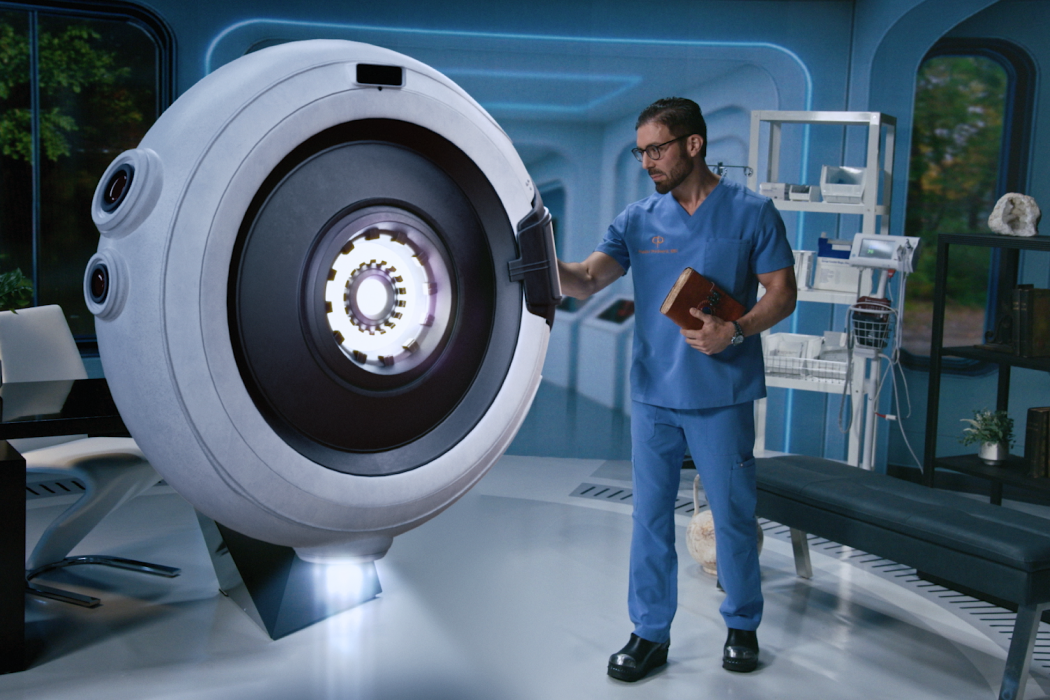
Dr. Pablo explains what the data shows in plain terms. Isolation is not neutral. The nervous system stiffens. The body prepares for a threat. Even when nothing is technically wrong.
“Hours of digital interaction can spike dopamine, flatten emotional range, and subtly reshape how the heart and brain fire together,” he explains.
This is stimulation, not nourishment.
The Screen Can Trigger You. It Can’t Hold You.
In the lab, Joseph scrolls. Games. Social feeds. Familiar patterns.
The monitors light up.
Dopamine spikes fast and sharply.
Beta brainwaves stay high.
Heart rhythms lose flexibility.
Then something small changes.
Eye contact. Even through a screen.
Alpha waves rise.
Heart rate steadies.
It is not the content. It is the recognition.
“Online interactions can mimic the feeling of connection,” Dr. Pablo says. “But they cannot nourish us.”
The body knows when it is being seen.
Presence Changes Everything
The experiment flips.
Joseph walks into a crowded nightclub alone. Music. Noise. Bodies everywhere. Connection all around him, but none directed at him.
Stress chemistry climbs again.
Then a surprise.
His girlfriend steps into the room.
Recognition hits first.
Physiology shifts immediately.
And then a kiss.
“In a heartbeat, Joseph’s entire physiology wakes up,” Dr. Pablo says.
Heart rhythms stabilize.
Stress drops.
Brainwaves synchronize.
No app. No avatar. No substitute.
“True connection isn’t coded,” Dr. Pablo explains. “It’s felt. Breath to breath. Body to body.”
What the Wheel of Age Reveals
When Joseph steps up to the Wheel of Age, the result surprises him.
“I thought it was going to be a lot worse,” he says.
Youth provides resilience. But it also hides risk.
Isolation accelerates aging quietly. Not through drama. Through accumulation.
“When your body can’t keep up with damage, that’s aging,” Dr. Pablo explains. “And isolation adds damage.”
The good news is simple. Connection is not complicated. It is available. And the body responds quickly when it returns.
Practical Ways to Feed Human Connection
This part of the episode slows things down and makes the science personal. Instead of big directives, it shows how small, repeatable moments register inside the body.
Prioritize face-to-face moments.
A shared laugh. A hug. Eye contact. These moments lower stress hormones and support immune balance.
Move together.
Walking, dancing, and even standing side by side in rhythm strengthen social bonding and reduce stress.
Balance digital life with physical presence.
Screens stimulate. People regulate. Both exist. Only one repair.
“We are not biological machines,” Dr. Pablo says. “Human connection is the fuel that keeps every part of us thriving.”
Joseph puts it more simply, “You’re never alone. There’s always someone going through the same thing.”
This episode is not about quitting technology. It is about remembering the soul behind every scroll. And what happens when the body finally feels it again.
What This Episode Leaves You With
This episode does not ask you to overhaul your life or abandon the digital world you live in. It leaves you with something quieter and more powerful. Awareness.
The body is always paying attention. It tracks who you sit next to. Who looks back at you. Who knows your face without a username attached. Connection is not an abstract idea or a personality trait. It is a biological input. And when it is missing, the body adapts in ways that speed aging rather than slow it.
Joseph’s experience makes one thing clear. Youth can absorb a lot, but it does not make us immune. What protects us long term are the moments that feel small. A shared laugh. A hand on a shoulder. Being fully present with another person, even briefly.
This episode invites you to notice where connection shows up in your own life and where it quietly fades. Not with guilt. With curiosity. The science is clear, the story is human, and the takeaway is simple. Real connection still matters. Your body knows it. Your future depends on it.
Watch this episode of Forever Young with Dr. Pablo Prichard on NBC to see how human connection reshapes the body in real time and why it remains one of the most powerful forces in how we age.